
How to Select Outdoor Electrical Enclosures for Engineering Projects
Outdoor electrical enclosures protect cable connections
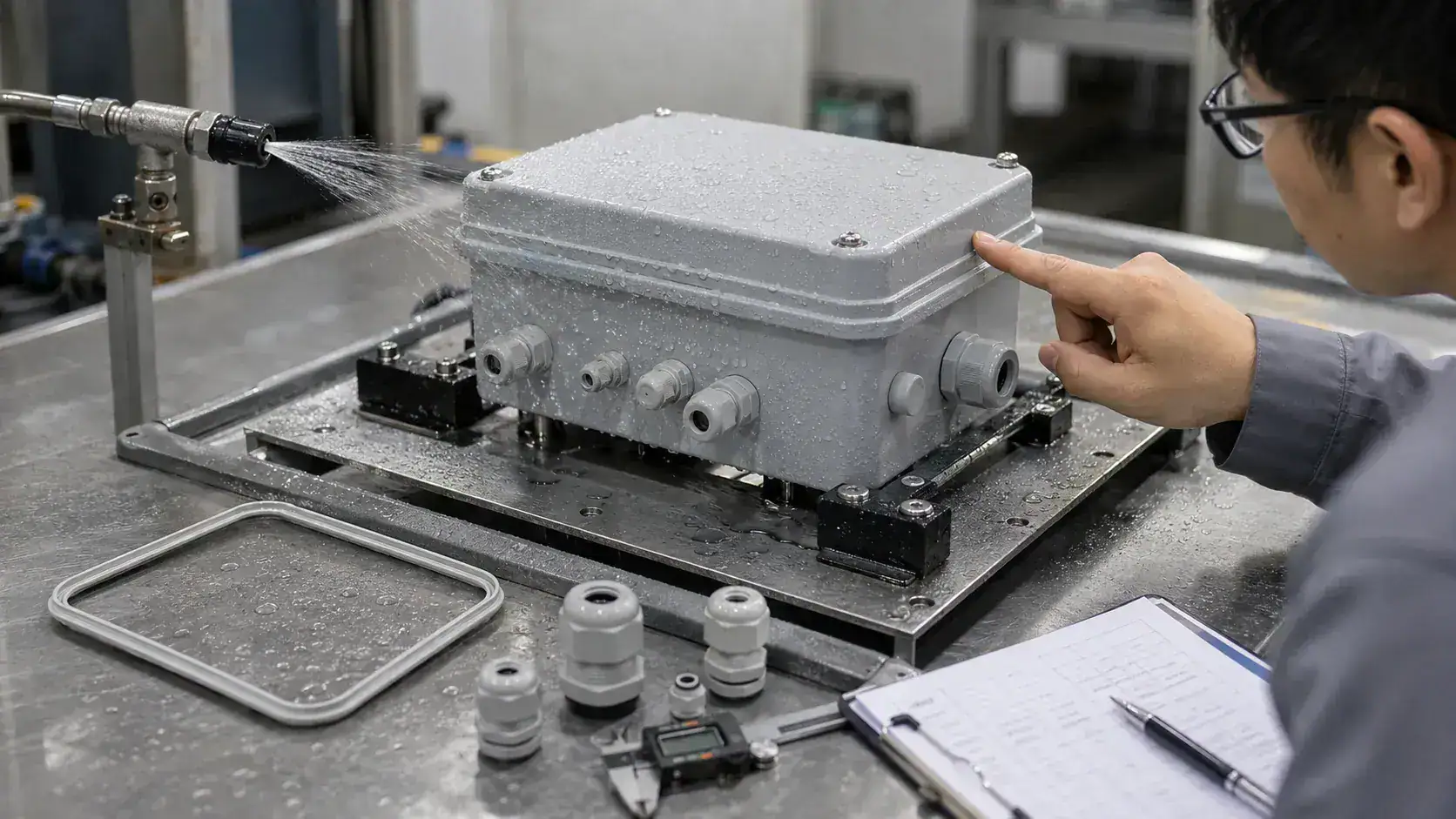
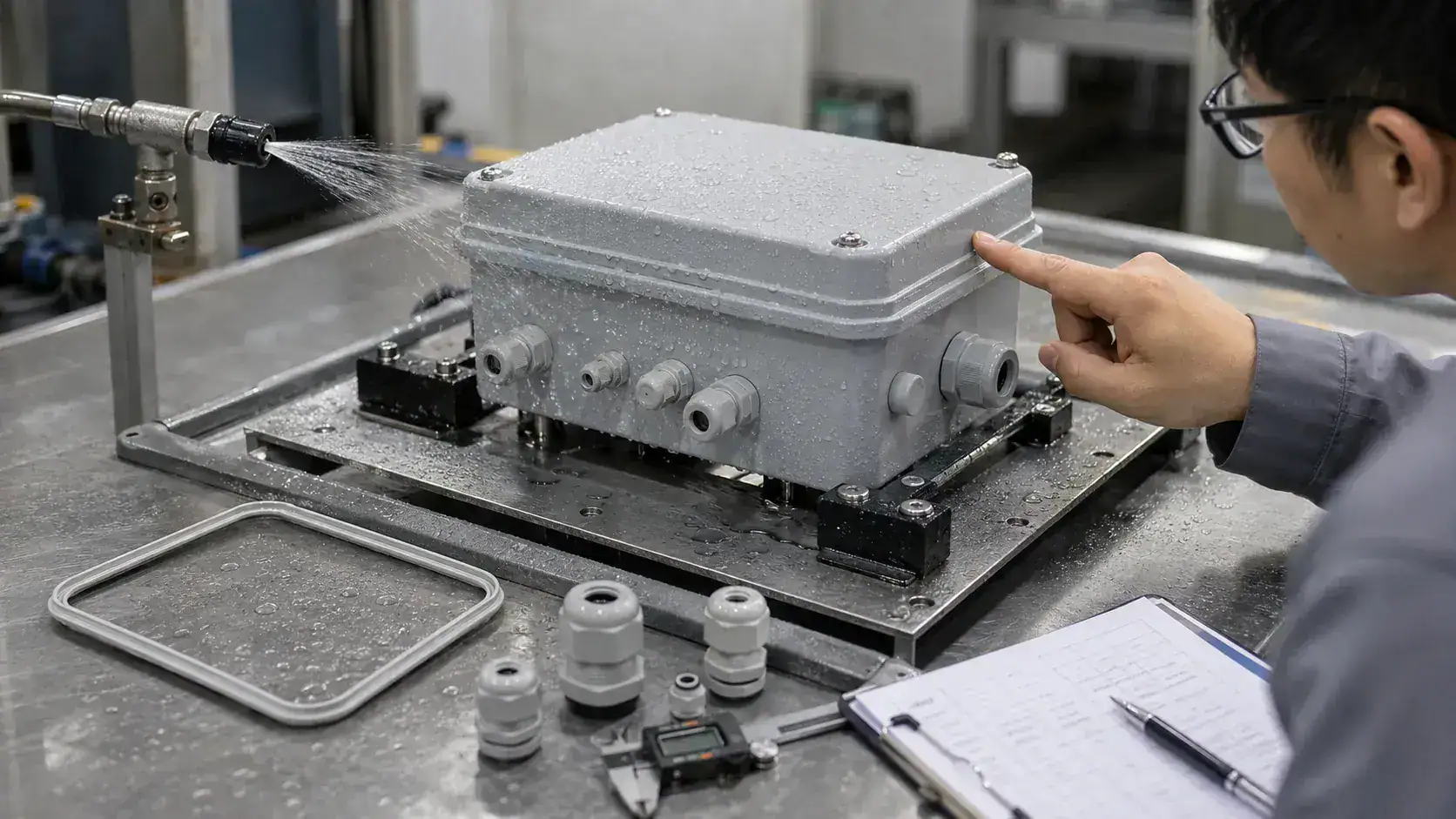
Article overview
Why Outdoor Enclosure Selection Matters to the Entire Project
Outdoor electrical enclosures protect cable connections, terminals, circuit breakers,
control modules and communication equipment from environmental exposure. For engineering
project buyers, however, selecting an enclosure involves more than choosing a box with a
high IP rating.
Rain direction, water pressure, dust, temperature changes, cable-entry locations,
maintenance frequency and installation height can all affect the long-term performance
of an outdoor electrical system.
This guide explains how project procurement teams can evaluate waterproof outdoor
electrical enclosures and prepare the technical information required for an accurate
quotation.
An enclosure is often a relatively small part of an electrical project, but failure at
one connection point can interrupt a much larger system. Moisture entering through a
poorly sealed cable opening may cause corrosion, unstable signals, terminal damage or
repeated maintenance work.
This is especially important in projects involving:
- Outdoor CCTV and communication systems
- Solar power and energy-storage installations
- EV and electric bicycle charging facilities
- Roadside traffic-control equipment
- Outdoor lighting and landscape projects
- Industrial automation equipment
- Access-control and barrier-gate systems
- Agricultural irrigation and pumping equipment
Buyers can review BOWO Electric’s
waterproof electrical enclosure product range
to compare junction boxes, distribution boxes, terminal boxes and control enclosures
for different project requirements.
Section 02
1. Evaluate the Actual Installation Environment
The first step is to identify the environmental conditions around the enclosure.
Describing a project simply as “outdoor” does not provide enough information for proper
product selection.
A box mounted beneath a covered roof experiences different exposure from an enclosure
installed beside a road, on an open pole or close to ground-level cleaning water.
| Site condition | Main risk | Selection priority |
|---|---|---|
| Sheltered outdoor area | Humidity, dust and occasional splash | Sealed cover, suitable IP rating and controlled cable entry |
| Open roadside installation | Rain, road dust and vehicle splash | Strong sealing, impact resistance and bottom cable entry |
| Charging facility | Moisture, long operating periods and multiple circuits | Internal space, circuit separation and maintenance access |
| Industrial outdoor equipment | Dust, vibration and repeated maintenance | Secure closure, durable mounting and service accessibility |
| Exposed low-level installation | Cleaning water, splash and standing moisture | Installation height, sealed glands and enclosure orientation |
Procurement teams should provide photographs, installation drawings or a short
description of the site when requesting a quotation. This allows the enclosure supplier
to review the expected exposure instead of recommending a product based only on its
external dimensions.
Section 03
2. Understand the Difference Between IP65, IP66 and IP67
The IP code describes the level of protection an enclosure provides against solid
objects and water. The first digit relates to solid-particle protection, while the
second digit relates to water protection.
IP65 outdoor electrical enclosures
IP65 enclosures are commonly considered for dust-tight installations that may be
exposed to water jets. They can be suitable for sheltered outdoor distribution,
commercial electrical installations and equipment mounted away from severe water
accumulation.
Projects that require DIN rail components or circuit breakers can consider an
IP65 waterproof electrical distribution box
with a transparent cover for easier visual inspection.
IP66 outdoor electrical enclosures
IP66 products are selected where the installation may encounter stronger water jets
or more demanding weather exposure. They are frequently used for outdoor wiring,
industrial equipment, solar systems and communication devices.
BOWO’s
IP66 F Series waterproof junction box
is available in multiple dimensions and can be customized with CNC-cut openings for
cable glands, connectors and switches.
IP67 outdoor electrical enclosures
IP67 enclosures provide dust-tight protection and a defined level of protection against
temporary immersion under specified test conditions. They are often considered for
exposed connection points where rain, splash and temporary water exposure are major
project concerns.
The
BOWO AG Series IP67 waterproof junction box
is manufactured from ABS with an optional transparent PC cover. Its published
specifications include IP67, IK08, CE and RoHS information, as well as multiple enclosure
dimensions for different cable and terminal arrangements.
A higher IP number should not be treated as the only purchasing criterion. The complete
installed assembly must be reviewed, including the cable glands, drilled openings,
sealing components, cover compression and mounting orientation.
For a more detailed explanation, project buyers can also read the
guide to choosing an IP-rated waterproof junction box
.
Section 04
3. Pay Special Attention to Cable Entries
Cable-entry openings are among the most important parts of an outdoor enclosure
installation. Even a well-sealed enclosure body cannot provide reliable protection when
the cable glands are incorrectly sized, loosely installed or placed in an unsuitable
position.
Before ordering, buyers should confirm:
- The number of incoming and outgoing cables
- The outside diameter of each cable
- The required cable-gland thread size
- The preferred entry surface
- The distance between adjacent cable openings
- Whether conduit adapters or connectors will be installed
- Whether unused openings require sealing plugs
Bottom-facing cable entries are frequently preferred for open outdoor installations
because they reduce direct exposure to falling rain. However, the final orientation
should still be determined according to the actual cable route and mounting structure.
Custom CNC machining can help ensure that cable-entry holes are accurately positioned
and consistently produced for repeated project quantities.
Section 05
4. Select the Enclosure Size Around the Internal Layout
Selecting the smallest box that can physically contain the components may reduce the
initial product cost, but it can create problems during wiring, installation and future
maintenance.
The enclosure should provide enough space for:
- Terminal blocks and connectors
- DIN rails and circuit breakers
- Cable bending radius
- Separation between power and signal wiring
- Mounting screws and internal plates
- Heat-generating electrical components
- Technician access during inspection
Project buyers should provide an internal component layout whenever possible. A simple
dimensional drawing showing the component sizes, mounting points and cable directions
can significantly improve enclosure selection.
Section 06
5. Compare Cover and Closure Designs
Outdoor electrical enclosures are available with screw-fixed covers, plastic latches,
metal latches and hinged structures. Each configuration supports a different maintenance
requirement.
Screw-fixed covers
Screw-fixed covers are suitable for connection points that do not require frequent
access. Multiple screws can create even compression around the sealing gasket when the
cover is correctly installed.
Hinged covers
Hinged enclosures are more convenient for control equipment, terminals and electrical
modules that require regular inspection. They allow technicians to open the cover
without fully removing it from the installation.
For demanding industrial installations, buyers can review the
IP66 hinged waterproof enclosure with metal latches
.
Transparent covers
Transparent covers are useful when operators need to view indicator lights, meters,
circuit-breaker positions or equipment status without opening the enclosure. This may
reduce unnecessary access and help preserve the sealed condition during routine checks.
Section 07
6. Review Installation Height and Orientation
The installation method can affect outdoor protection as much as the enclosure
specification.
A good project layout should avoid:
- Positioning the enclosure where water regularly accumulates
- Installing cable openings directly upward without suitable protection
- Placing the enclosure too close to moving mechanical parts
- Blocking the cover with pipes, frames or nearby equipment
- Allowing unsupported cables to pull against the glands
- Mounting the box where technicians cannot safely reach it
Installation drawings should include the mounting surface, enclosure orientation,
cable direction and available maintenance clearance.
Section 08
7. Learn From Real Outdoor Installation Cases
Real project applications provide more useful selection information than product
specifications alone.
Roadside CCTV system
In a
roadside CCTV waterproof junction box installation
,
the enclosure protected camera power and communication connections from rain, humidity,
road dust and vehicle splash. Bottom-entry cable glands and an accessible mounting
position supported both sealing and future maintenance.
Residential barrier gate
A
residential barrier-gate project
used an external AG Series enclosure to separate camera and communication wiring from
the gate’s mechanical drive compartment. The separate service point made the electrical
connections easier to inspect.
Electric bicycle charging area
In an
electric bicycle charging-area project
,
waterproof junction boxes and distribution enclosures were selected according to branch
connections, local circuit protection, humidity, wind-driven rain and cleaning splash.
These cases show why project environment, cable layout and maintenance access should be
reviewed together instead of selecting an enclosure from the IP rating alone.
Section 09
8. Verify Product Information and Supplier Capability
Engineering buyers should request product specifications and supporting documentation
before approving an enclosure for a project.
Useful information may include:
- Material specification
- IP and impact-resistance information
- Operating temperature range
- External and internal dimensions
- Cover and gasket structure
- Available certifications or compliance documents
- Customization and machining capability
- Sample and production lead time
- Packaging information
Buyers can review BOWO Electric’s
waterproof electrical enclosure qualification information
and learn more about the company’s manufacturing background on the
BOWO Electric factory page
.
Section 10
Information to Include in an Outdoor Enclosure RFQ
Providing complete project information allows the supplier to recommend a more
appropriate enclosure and prepare a more accurate quotation.
An effective RFQ should include:
- Project application
- Installation country and environment
- Required IP rating
- Preferred enclosure material
- External or internal size requirement
- Component and terminal layout
- Cable quantity and cable diameters
- Cable-entry positions
- Required mounting method
- Transparent or opaque cover
- Required quantity
- Customization requirements
- Project schedule and destination
Section 11
Request an Outdoor Electrical Enclosure Recommendation
BOWO Electric supplies waterproof junction boxes, distribution boxes, terminal boxes
and customized electrical enclosures for outdoor and industrial projects.
Send your enclosure dimensions, installation photographs, cable information,
component layout and required quantity. The BOWO team can review the application and
recommend a suitable enclosure configuration for quotation.
Section 12
Frequently Asked Questions
Is an IP67 enclosure always better than an IP65 enclosure?
Not necessarily. The correct rating depends on the actual water exposure, installation
requirements and relevant project standards. Cable entries, glands and mounting
orientation must also be considered.
Can holes be added before the enclosure is delivered?
Yes. Waterproof electrical enclosures can be customized with CNC-machined openings for
cable glands, connectors, switches and other components. Buyers should provide hole
diameters and position drawings.
Should cable entries be placed at the bottom?
Bottom entry is commonly used for outdoor projects because it reduces direct exposure
to falling rain. However, the best position depends on the cable route, mounting surface
and installation design.
What information is needed to select the enclosure size?
Provide the dimensions of the internal components, terminal arrangement, cable
diameters, required bending space and mounting points. Allow additional room for
installation and maintenance.
Can BOWO supply samples for project evaluation?
Sample availability depends on the required model, size and customization. Send the
product dimensions, application and destination to confirm sample options and delivery
arrangements.
Planning a project?
Share the application, installation environment and enclosure requirements with our engineering team.